
How India can turn maritime geography into trade power, logistics dominance, and strategic influence.
The ships are already passing India.
Every day, thousands of vessels move across the Indian Ocean carrying crude oil, LNG, containers, electronics, machinery, fertilisers, food, cars, chemicals, textiles, and raw materials. Much of this traffic passes close to India’s coastline. Some moves west toward the Suez Canal and Europe. Some traffic moves east toward the Strait of Malacca and the Pacific. Some traffic moves north toward the Persian Gulf. Some moves south toward Africa and the Cape of Good Hope.
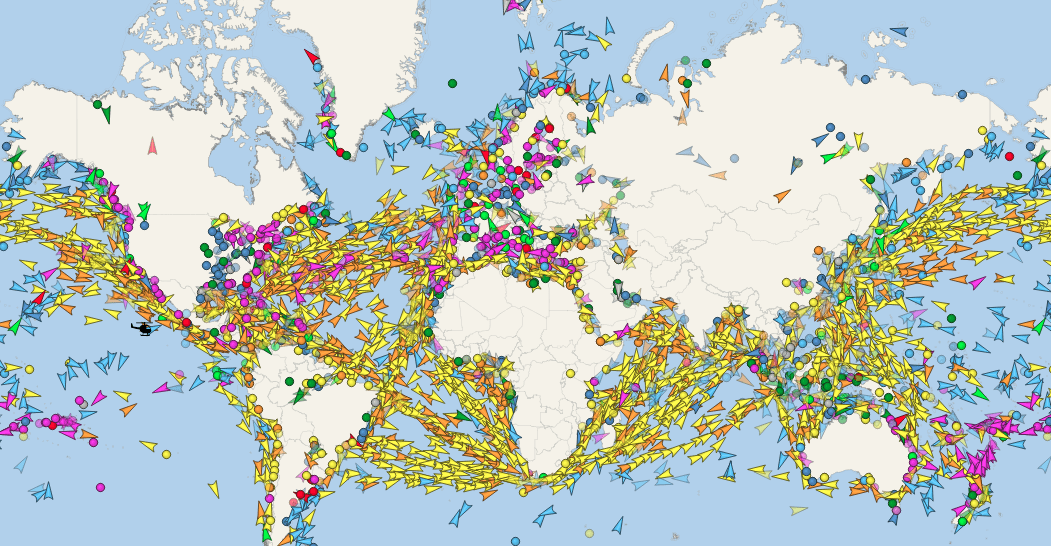
Look at a global maritime traffic map and one thing becomes obvious: the world economy does not float evenly across the oceans. It flows through a few crowded arteries.
These are not just shipping routes. They are the bloodstream of global trade.
And India sits right in the middle of one of the most important maritime theatres in the world.
The real question is not whether India has location. India has that in abundance. The real question is whether India can convert that location into maritime power.
Singapore did it. Dubai did it. Rotterdam did it. China is doing it aggressively.
Can India do it?
That is the opportunity.
The World Runs on Maritime Chokepoints
A chokepoint is a narrow sea passage that ships use because it saves distance, time, and cost.
When a chokepoint works smoothly, we barely notice it. Goods arrive. Oil flows. Prices remain stable. Supply chains keep moving.
When a chokepoint is disrupted, the world suddenly remembers how fragile global trade really is.
The most important maritime chokepoints include:
- Strait of Malacca
- Suez Canal and Red Sea route
- Strait of Hormuz
- Panama Canal
- English Channel and North Sea approaches
- Bab-el-Mandeb
- Strait of Gibraltar
- Bosporus and Dardanelles
- Cape of Good Hope route
These passages are not merely geographic features. They are geopolitical pressure points.
If the Suez Canal is disrupted, ships may need to go around the Cape of Good Hope. That means longer journeys, higher fuel costs, higher insurance, delayed deliveries, and increased freight rates.
If the Strait of Hormuz becomes risky, energy markets get nervous.
If the Malacca Strait is blocked or threatened, East Asian economies immediately feel exposed.
This is why maritime routes matter not just to shipping companies, but to governments, consumers, investors, exporters, importers, and ordinary households.
The price of fuel, food, fertiliser, medicines, electronics, and industrial goods can all be affected by what happens at sea.
In simple terms: ocean security is economic security.
Asia Is Now the Beating Heart of Shipping.
The densest ship movements on global maritime maps are around East Asia, Southeast Asia, and the Indian Ocean.
China, Japan, South Korea, Singapore, Malaysia, Indonesia, Vietnam, Thailand, India, and the Gulf region form one of the busiest maritime zones in the world.
This is not surprising.
Asia is the world’s manufacturing engine. It is also a huge energy consumer. Raw materials flow into Asia. Finished products flow out. Oil and LNG move from the Gulf toward India, China, Japan, and Korea. Containers move between Asia, Europe, Africa, and the Americas.
This is why the Strait of Malacca and Singapore Strait are so important.
They connect the Indian Ocean to the South China Sea and the Pacific. For China, Japan, South Korea and ASEAN, this route is vital. For India too, it is a critical eastward link.
Singapore’s rise is built on this reality.
Singapore does not have a large domestic market. It does not have India’s coastline. It does not have India’s population. It does not have India’s natural hinterland.
Yet Singapore became one of the world’s greatest maritime hubs because it understood one thing very clearly:
Location is useful only when combined with efficiency.
Ships stop where time is respected.
Ships stop where paperwork is fast.
Ships stop where services are reliable.
Ships stop where repairs, fuel, finance, insurance, arbitration, cargo handling and onward connectivity are world-class.
That is the lesson India must absorb.
India’s Geography Is World-Class — But Geography Is Not Enough.
India sits between the Middle East, Africa, Europe, Southeast Asia, and the Pacific.
To its west lie the Persian Gulf, the Strait of Hormuz, the Red Sea, Suez and Europe.
To its east lie the Bay of Bengal, Southeast Asia, Malacca, Singapore, Vietnam, China, Japan and Korea.
To its south lies the vast Indian Ocean connecting Africa, Australia and the southern sea routes.
This is a powerful position.
But geography is only potential.
A shop on a busy road does not automatically become successful. It must offer something people want. Similarly, a country sitting near busy shipping lanes does not automatically become a maritime power.
Ships passing close to India should find India useful.
They should be able to refuel in India. Repair in India. Change crew in India. Transship cargo in India. Access spare parts in India. Use Indian logistics. Use Indian financial services. Use Indian arbitration. Trust Indian ports. Trust Indian timelines.
That is when geography becomes money.
That is when coastline becomes economic power.
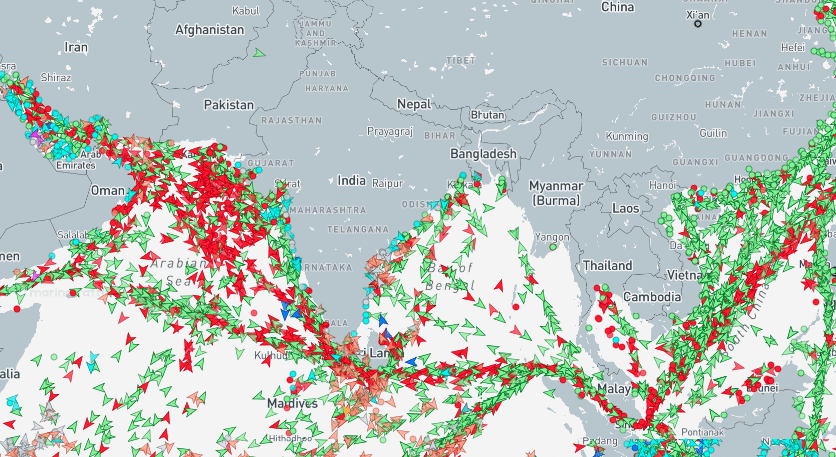
India’s location is powerful. The task is to convert location into logistics, services and trust.
India’s Biggest Opportunity: Transshipment
One of India’s biggest missed opportunities has been transshipment.
Transshipment means cargo is shifted from one ship to another at an intermediate hub. For decades, a large portion of Indian cargo has been routed through foreign hubs such as Colombo, Singapore, Port Klang and Jebel Ali.
This is not ideal.
If Indian cargo must first go to another country before moving onward, India loses time, money, control and influence.
India needs to aggressively build its own transshipment hubs.
Ports such as Vizhinjam, Vallarpadam/Kochi, Tuticorin, Mundra, JNPT, Vadhavan, Chennai and the Andaman & Nicobar region can play an important role.
Vizhinjam is especially important because of its deep-water potential and location close to international shipping lanes.
But building ports is not enough.
India must deliver fast turnaround, reliable cranes, deep drafts, efficient customs, strong rail and road links, good warehousing, digital documentation and predictable costs.
Shipping companies do not reward slogans. They reward reliability.
The Hidden Goldmine: Ship Services
The public often thinks ports make money only by handling cargo.
That is incomplete.
The larger opportunity is maritime services.
Every vessel needs fuel, repairs, spare parts, inspection, classification, crew change, food supplies, emergency assistance, insurance, legal support, documentation and maintenance.
This is where Singapore became brilliant.
A ship does not stop only to unload cargo. It stops because the entire ecosystem works.
India can become the service station of the Indian Ocean.
This may sound modest, but it is a huge business.
Think of the number of ships moving between:
- Gulf and East Asia
- Africa and Asia
- Europe and Asia
- Australia and the Middle East
- India and Southeast Asia
If even a meaningful percentage of these ships stop in India for bunkering, repair, transshipment, crew change or support services, the economic opportunity is enormous.
But this requires one quality above all:
Speed.
Ships are expensive assets. Time lost is money lost. If India wants global shipping lines to depend on Indian ports, Indian systems must respect time like the shipping industry does.
No unnecessary delays. No paperwork jungle. No “come tomorrow” culture.
The sea is unforgiving. Maritime business is even more so.
Green Shipping: India Must Catch the Next Wave
The shipping industry is entering a major transition.
Ports and ships are under pressure to reduce emissions. Future maritime hubs will need to offer cleaner fuels, greener port operations, shore power, electric harbour craft, green hydrogen, ammonia, methanol, LNG transition systems and cleaner ship recycling.
This is where India has a fresh opportunity.
Instead of merely catching up with older maritime hubs, India can leapfrog into green shipping.
India can build:
- green hydrogen bunkering hubs
- ammonia and methanol fuel infrastructure
- solar-powered ports
- electric harbour tugs
- cleaner ship recycling at Alang
- low-carbon logistics parks
- digital fuel certification systems
- green coastal shipping corridors
This is not just environmental idealism. It is business strategy.
If global shipping lines are pushed by regulation and customers to reduce emissions, they will prefer ports that help them meet those targets.
India must not wait until the standards are set by others.
It should help shape the standards.
Maritime Security Is India’s Strategic Advantage
India has another asset: a strong Navy.
In an age of piracy, drone attacks, regional conflict, smuggling, illegal fishing and grey-zone threats, maritime security is becoming more important.
Commercial shipping values stability.
India can become a trusted security anchor in the Indian Ocean by strengthening:
- maritime surveillance
- anti-piracy operations
- emergency rescue
- regional naval partnerships
- port security
- digital maritime domain awareness
- island partnerships
- disaster response
This is where national strategy and commercial opportunity meet.
Security creates trust.
Trust attracts traffic.
Traffic creates business.
Business builds influence.
That is the maritime chain.
What India Must Do Now
India should stop thinking only in terms of “building ports”.
It must think in terms of building a full maritime platform economy.
That means combining:
- deep-water ports
- transshipment hubs
- coastal shipping
- ship repair
- bunkering
- green fuels
- maritime finance
- insurance
- arbitration
- warehousing
- rail and road connectivity
- inland waterways
- digital vessel tracking
- skilled maritime manpower
- naval security
This is how Singapore became Singapore.
Singapore was not built on size. It was built on efficiency, trust and services.
India has a much larger coastline, a huge domestic market, a powerful location, strong software talent, a capable Navy and rising manufacturing ambitions.
But India must execute better.
Not louder. Better.
The world does not need another country making announcements. It needs reliable maritime infrastructure.
Conclusion: The Ships Are Already Passing.
India’s maritime opportunity is enormous.
The country sits near some of the world’s most important sea routes. It is close to the Gulf energy corridor, the Suez route, the East Africa route, the Malacca route and the Indo-Pacific trade system.
But India must not simply watch ships pass by.
It must make them stop.
Stop to refuel.
Stop to repair.
Stop to transship.
Stop to change crew.
Stop to access services.
Stop because Indian ports are efficient.
Stop because Indian systems are reliable.
Stop because India is trusted.
That is how location becomes power.
India does not need to physically control Malacca, Hormuz, Suez or Panama. That is neither possible nor necessary.
India’s opportunity is to dominate the services around the Indian Ocean routes.
If India gets this right, it can reduce logistics costs, strengthen exports, improve energy security, create high-quality jobs, build maritime finance, support green shipping, and become a serious global maritime power.
The Indian Ocean is not just water around India.
It is India’s economic front yard.
The ships are already passing.
The question is whether India is ready to make them stop.
The Master Stroke in the making.
The Great Nicobar Project (formally known as the Holistic Development of Great Nicobar Island) is a massive ₹72,000–₹80,000 crore mega-infrastructure initiative approved by the Indian Cabinet in 2021. Conceived by NITI Aayog and executed by the Andaman and Nicobar Islands Integrated Development Corporation Limited (ANIIDCO), the project aims to transform the southernmost island of the archipelago into a major global maritime, economic, and strategic hub over a phased 30-year period.